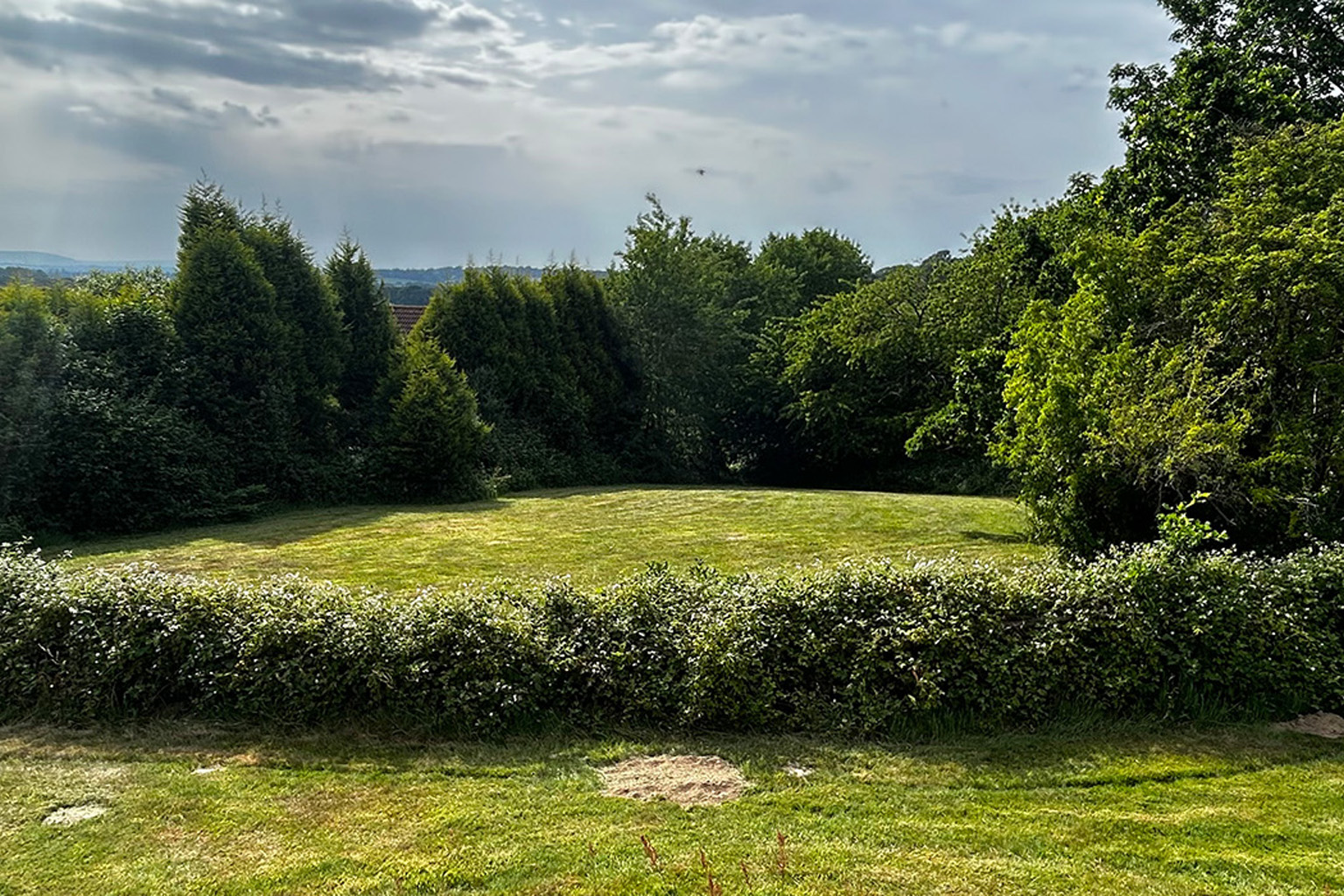
A landowner with an unused side garden, a paddock behind a house, or a piece of former commercial land will often ask: can I sell land without planning? The short answer is yes. You can sell land at any stage, including before a planning application has been made. The more useful question is whether selling now will produce the best commercial outcome after allowing for risk, time, cost, and the likely buyer.
Land without planning permission is not necessarily low-value land. It is simply land where the buyer must take on more uncertainty. That uncertainty affects what they will pay, how they structure an offer, and whether they will proceed at all. A sensible strategy starts with an honest view of what the site can realistically deliver, not a headline valuation based on the most optimistic scheme imaginable.
Can I sell land without planning permission?
Yes. Land can be sold unconditionally, meaning the buyer completes the purchase without waiting for planning consent. It can also be sold subject to planning, where completion depends on the buyer obtaining an acceptable permission. A third route is an option or promotion agreement, under which a developer or promoter works to secure planning and the landowner receives an agreed share or percentage of the eventual sale value.
Each route shifts risk differently. An unconditional sale gives the seller speed and certainty, but the buyer will usually discount the price for planning risk, abnormal costs, and the possibility that no viable development can be achieved. A conditional sale can support a stronger price if permission is obtained, but it takes longer and the contract terms need careful attention. Options and promotion agreements may suit larger or more complex sites, particularly where planning work could take years, but they are not automatically the best answer for every landowner.
The right route depends on the site, the owner’s appetite for risk, and the difference between its current value and its credible development value.
Why planning status changes the price
A buyer of land with a full planning permission can assess the scheme with a relatively clear set of assumptions: unit numbers, access, design, likely build costs, sales values, and timescale. There will still be risk, but the central question of whether development is acceptable has been answered.
Without permission, the buyer has to make judgments about far more than the number of homes that could fit on a plan. They will look at local policy, planning history, neighboring uses, access, flood risk, trees, utilities, ground conditions, drainage, heritage constraints, ecology, and the likely reaction of the local planning authority. They will also consider whether a technically acceptable scheme is financially viable once construction costs, affordable housing requirements, contributions, finance, and professional fees are included.
This is why two sites of similar size can have very different values. A rear garden with a clear access point, supportive local policy, and precedent for nearby infill development may attract serious interest without planning. A larger parcel with no practical access or a difficult flood constraint may not, even if it appears attractive on a map.
Planning potential creates value only when the potential is credible and deliverable.
The main ways to sell land before planning
An unconditional sale is usually the cleanest option where a buyer understands the opportunity and is willing to take planning risk. It can be appropriate for a modest infill plot, a site with clear local precedent, or land where the owner values a quick, certain exit. The price should reflect what is known, what remains uncertain, and the buyer’s cost of carrying that uncertainty.
A conditional contract is often used when the seller wants the buyer to pursue planning but does not want to sell unless an acceptable permission is secured. The agreement should define what permission is acceptable, who controls the application, the long-stop date, the purchase price or pricing mechanism, and what happens if the buyer does not progress matters properly. A vague agreement can leave an owner tied up for too long with little control.
An option gives a buyer the right, but not the obligation, to purchase within a specified period, usually after pursuing planning. It can work where a developer needs time to de-risk a site, but the option price, deduction structure, and obligations must be commercially fair. An option that gives the buyer wide discretion and the landowner limited visibility is rarely a good arrangement.
A promotion agreement is different. A promoter seeks planning, markets the land once consent is in place, and is paid an agreed share of the sale proceeds. This can align interests on larger sites because both parties benefit from maximizing the land value. However, the agreement still needs clear controls over costs, marketing, reserved matters, and the decision to accept an offer.
Do you need to apply for planning first?
Not always. Applying for planning can increase value, but it can also consume time and money without improving the eventual outcome. The decision should be based on the likely value uplift against the cost and risk of securing consent.
For a straightforward site, an initial planning review may show a strong enough case that a buyer will compete for it before an application is submitted. In that situation, the owner may be better off selling with well-presented evidence rather than funding a full application. A concise package showing title information, site measurements, access details, planning history, local policy context, and an initial development concept can make a material difference to buyer confidence.
For a constrained site, early planning work may be more valuable. A pre-application response, access assessment, flood report, tree survey, or drainage strategy can answer the issue that would otherwise prevent buyers from making a meaningful offer. The aim is not to commission every possible report. It is to address the constraints that genuinely determine whether development is achievable.
There is also a middle ground. A landowner can commission an initial appraisal and test the market quietly, then decide whether a planning application is justified once real buyer feedback is available. This avoids spending heavily based on assumptions while preserving the opportunity to pursue consent later.
What buyers will want to know
Serious developers do not buy land based on acreage alone. They want enough information to establish whether the opportunity is worth pursuing and at what price. Before going to market, it is worth understanding the basics of ownership, boundaries, rights of way, access, services, and any existing leases or occupiers.
They will also test the development case. Is the land within or close to a settlement boundary? Has the local planning authority approved comparable development nearby? Could vehicles safely access the site? Are there protected trees, listed buildings, contamination concerns, overhead lines, or drainage limitations? Does the likely scale of development support the cost of dealing with these issues?
You do not need perfect answers to every question before selling. But presenting known facts clearly, and identifying what needs further investigation, is much more credible than claiming the land is suitable for a large scheme without evidence.
Avoid the common valuation trap
Landowners are sometimes told that their land is worth a high figure “with planning,” even where there is no clear route to securing it. That figure may be based on gross development value rather than the residual land value a developer can actually afford after costs, planning obligations, finance, profit, and risk.
A realistic appraisal works backward from a plausible scheme. It considers what could be built, what it could sell for, what it would cost to deliver, and what margin a buyer needs to justify the project. The result may be lower than an optimistic estimate, but it is far more useful when negotiating with credible buyers.
Equally, do not assume that lack of planning means accepting the first low offer. Where a site has genuine potential, a properly managed sale process can create competition among developers who have different planning strategies, build models, and risk appetites. The objective is to expose the opportunity to the right buyers while keeping the site confidential and the information controlled.
A practical starting point
Before deciding whether to sell immediately or seek planning, establish the site’s planning context and commercial constraints. Look beyond a simple sketch of what might fit. Consider access, local policy, neighboring development, likely abnormal costs, and whether the project would still make financial sense for a buyer.
Then compare the realistic outcomes: a prompt unconditional sale, a conditional sale at a potentially higher price, or a longer-term planning-led strategy. The best answer is rarely the route with the largest headline number. It is the route that produces an acceptable return with a level of time, cost, and risk you are genuinely prepared to take.
For landowners who are uncertain where to begin, a clear, commercially grounded appraisal can prevent expensive mistakes. The most valuable next step is often not submitting a planning application or putting up a sale board. It is understanding what the land can reasonably achieve before committing to either.