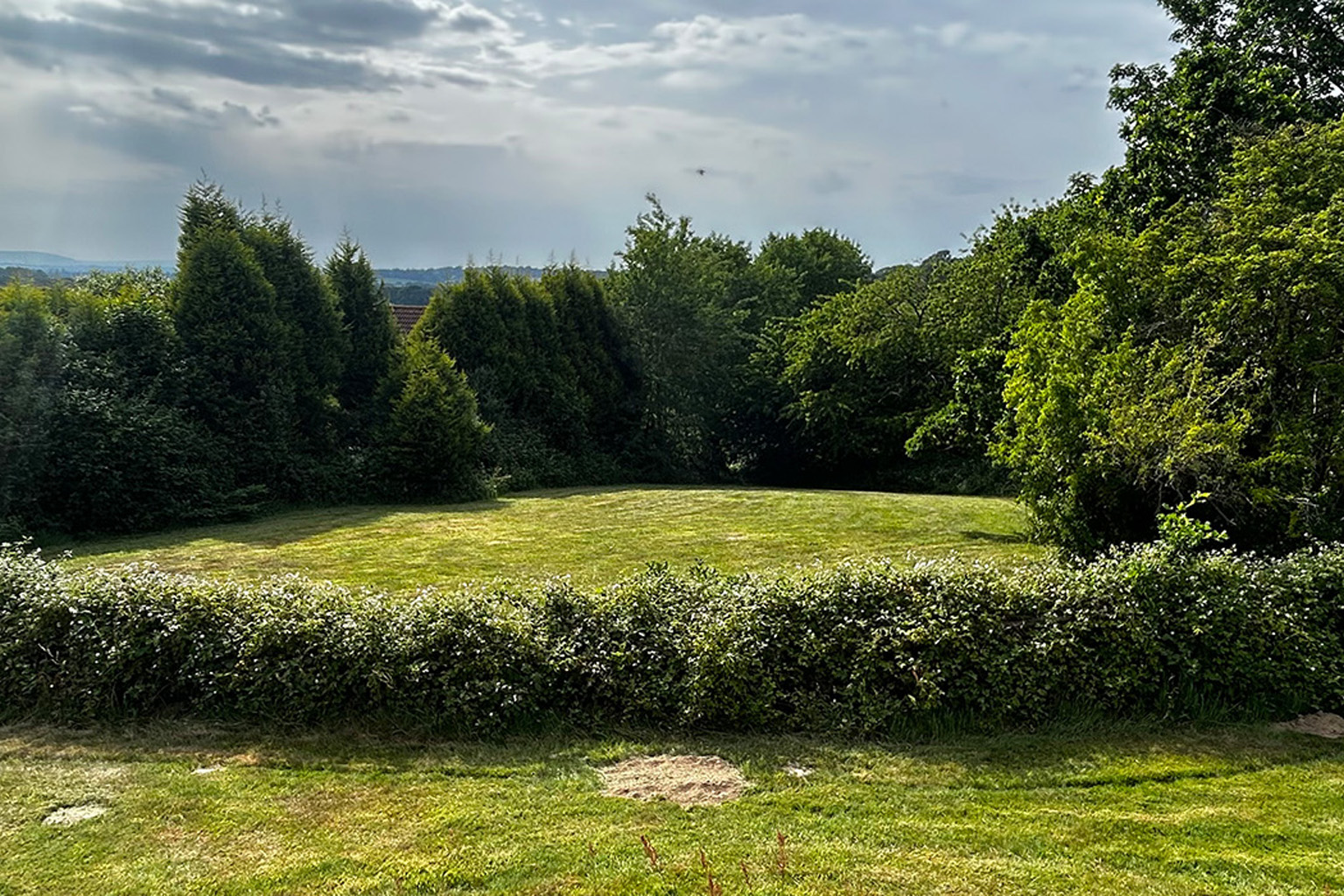
A large rear garden can look like an obvious building opportunity. It may have road access nearby, neighboring infill schemes, and enough space for a small house. But knowing how to value garden plots means separating apparent potential from development value that can actually be realized.
The gap matters. A plot may attract interest from developers, yet still be difficult to secure planning permission for, expensive to access, or too constrained to build profitably. A credible valuation is not a hopeful estimate based on a nearby sale. It is a commercial assessment of what can be built, what it will cost, how likely it is to obtain consent, and what a buyer can reasonably pay after allowing for risk.
Start with the right question
The first question is not, “What is my garden worth?” It is, “What is a developer likely to pay for this site in its current condition, given the risks involved?”
That figure can be very different from the value of a completed new home. Developers price land from the bottom up. They estimate the sales value of the proposed homes, deduct construction costs, professional fees, finance, planning obligations, site works, a contingency, and an acceptable profit margin. What remains is the residual land value.
This is why two apparently similar garden plots can have very different values. One may support a clean, well-proportioned home with direct access and strong local demand. The other may require a long access drive, removal of protected trees, difficult drainage works, and a planning application with an uncertain outcome. Square footage alone does not resolve those differences.
How to value garden plots through planning potential
Planning is usually the largest driver of value. A garden with implementable planning permission is normally worth more than one with no application history, but consent is not the only factor. The quality and deliverability of the consent matter just as much.
Start by looking at the surrounding pattern of development. Have nearby gardens been divided for new homes? Are there recent approvals for backland, infill, or tandem development? These decisions can indicate that the principle of development may be acceptable, although every site must still be assessed on its own merits.
Local policy is equally important. Many planning authorities are cautious about garden development where it creates cramped layouts, harms neighborhood character, causes overlooking, or reduces green space. A site in a built-up area may still be refused if the proposal looks out of place or provides poor living conditions for future occupants.
The likely form of development is more useful than a broad statement that a plot “could be developed.” Can it accommodate one detached home, two smaller units, or a replacement garage with accommodation above? Is there enough space for private amenity area, refuse storage, cycle storage, parking, and appropriate separation from neighboring homes? The answer affects both planning risk and the eventual sale value.
A pre-application discussion or an initial planning review can be worthwhile where the potential value justifies the cost. It does not guarantee an approval, but it can identify the objections that need to be addressed before a landowner commits to a full application.
Access, shape, and servicing can change the numbers
A garden plot needs more than enough land area. It needs a buildable and serviceable layout.
Access is often the first practical constraint. A narrow side passage may appear sufficient on a plan but be unsuitable for construction traffic, emergency access, refuse collection, or a usable driveway. If a new access is required across retained land, the legal rights must be clear. A developer will discount the land value if access depends on negotiation with a neighbor or if an existing owner must give up valuable parking or garden space.
Plot shape matters too. An irregular site can lose a surprising amount of usable area once setbacks, turning space, and the relationship with adjoining buildings are considered. Sloping land, retaining walls, mature trees, drainage issues, overhead lines, and restrictive covenants can all add cost or reduce the achievable scheme.
Utilities should be considered early. The cost of connecting water, power, drainage, and telecommunications can be material, particularly where a new connection crosses third-party land or the local sewer network has limited capacity. These items are not always visible in a basic appraisal, but an experienced buyer will allow for them.
Use comparable evidence carefully
Nearby land sales are useful, but they should not be treated as a price list. Land transactions are often private, and the headline price may reflect planning status, deferred payments, unusual site conditions, or a wider property deal that is not obvious from public records.
The most relevant comparables are usually sites with a similar planning position, location, scale, access arrangement, and likely end product. A garden plot with full permission for a three-bedroom house should not be compared directly with a larger site allocated for multiple apartments. Nor should it be valued solely against an established home sale without accounting for the cost and risk of creating that home.
Look at completed new-build values as well as land deals. What do well-designed new homes actually sell for in the immediate area? Is demand strongest for family houses, compact starter homes, or apartments? In higher-value parts of London and the South East, buyers may pay a premium for quality, but they are also selective. Overestimating the end value is one of the quickest ways to produce an unrealistic land figure.
Build costs, finance, and developer profit are not optional deductions
A residual valuation is only credible when its assumptions are realistic. Construction costs vary widely according to design, specification, site access, ground conditions, and the need for demolition or abnormal works. A constrained rear garden site is rarely as straightforward or as inexpensive as building on an open, serviced plot.
Professional fees, planning costs, surveys, legal expenses, marketing, warranties, and finance must also be included. Depending on the proposal, there may be local infrastructure contributions, affordable housing requirements, or other planning obligations. A suitable contingency is essential because early-stage projects carry uncertainty.
Developer profit is not simply a negotiating tactic. It is the return required to justify putting capital at risk through planning, construction, sales, and market changes. If a valuation leaves no sensible margin after all costs, the site may still have theoretical potential but limited market value to a commercial buyer.
This is also why a landowner should be cautious of an offer that assumes unusually high sale prices, unusually low build costs, or no allowance for risk. Those numbers may make an appraisal look attractive, but they can unravel later when the buyer seeks to renegotiate.
Value depends on the route you choose
A garden plot can be sold in several ways, and the route affects both price and certainty.
Selling without planning permission is usually faster and avoids upfront planning costs, but a buyer will discount for the uncertainty. Selling with planning permission can improve value and attract a wider pool of buyers, although the landowner takes on the time, cost, and risk of securing consent.
A conditional contract or option agreement can sit between those approaches. A developer agrees a mechanism for buying the land if planning permission is obtained, while taking responsibility for the application. This can reduce the landowner’s upfront exposure, but the agreement needs careful attention to price, timescales, planning obligations, control of the application, and what happens if the scheme changes.
For some sites, a promotion agreement or joint venture may produce a better outcome than an immediate sale. These arrangements can allow a landowner to share more of the eventual upside, but they also involve a longer timetable and require clear commercial alignment. The right choice depends on appetite for risk, the strength of the planning case, and whether certainty or maximum potential value is the priority.
A practical appraisal before you set expectations
Before marketing a garden plot or entering discussions with a developer, gather the documents and facts that influence value. Title information, plans, access rights, utility details, planning history, drainage information, and known neighbor issues can all affect a buyer’s view. Early clarity reduces the chance of a price being chipped later.
It is sensible to test more than one scenario. Consider the value with no planning permission, the value with a realistic consent, and the likely cost and time needed to move between those positions. A modest but deliverable scheme may be worth more in practice than an ambitious proposal that is difficult to approve or build.
The strongest garden plot valuation is not the highest number someone is willing to mention at the outset. It is the number supported by planning evidence, site realities, market demand, and a clear route to delivery – giving you a sound basis for deciding whether to sell, pursue planning, or retain a stake in the opportunity.