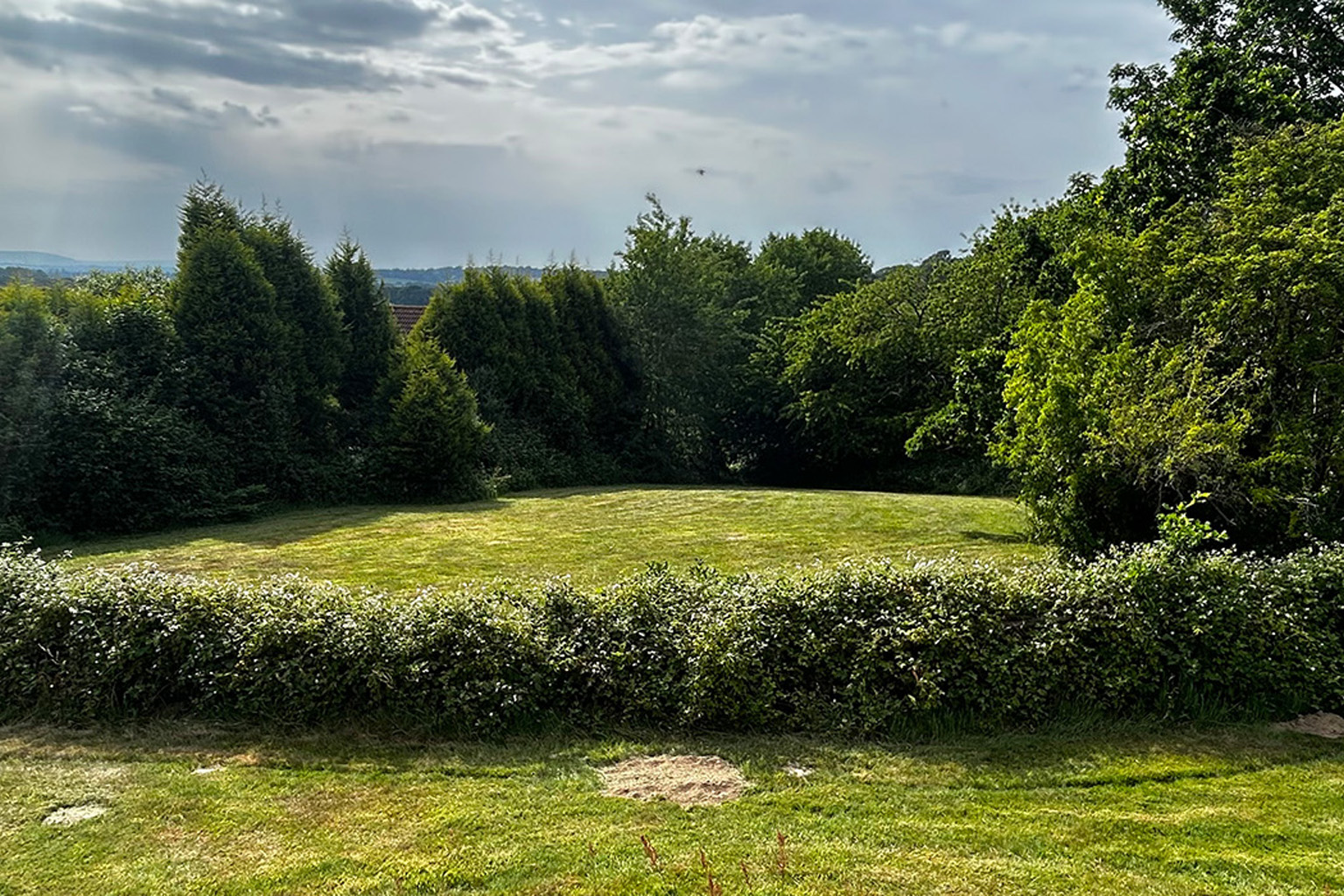
A rear garden, a disused yard, or an overlooked corner of a larger holding can look like an obvious development opportunity. But planning permission is not simply a document that turns land into a valuable asset. Its real value depends on what can be built, what it will cost to deliver, how long approval is likely to take, and whether a buyer or developer will actually want the finished opportunity.
For landowners and investors, the question is rarely just whether planning permission can be obtained. The more useful question is whether pursuing it creates enough additional value to justify the time, cost, and risk involved.
What Planning Permission Really Changes
Planning permission is formal consent from the local planning authority to carry out a specified development. For most new homes, changes of use, significant extensions, or commercial schemes, it is the point at which an idea becomes a defined proposal that can be assessed, priced, financed, and marketed.
That definition matters. Land marketed as having “potential,” without an informed view of policy or constraints, may attract attention but often attracts cautious offers. A site with a credible planning strategy, supporting technical work, and a realistic development concept is easier for a developer to assess. It can reduce uncertainty, but it does not remove it altogether.
Consent also has limits. A permission for two houses is not proof that three houses will be acceptable. Approval for a particular layout does not guarantee that the site can be built at the assumed cost. Conditions, legal obligations, access requirements, drainage works, and utility upgrades can materially affect the outcome.
The commercial value is therefore tied to deliverability, not merely to the existence of a planning decision notice.
Start With the Site, Not the Scheme
Landowners often begin by asking how many units might fit. That is understandable, but it is not the right first test. A sensible appraisal starts with the land itself: its boundaries, access, levels, surrounding uses, title position, and relationship with neighboring homes.
A narrow access point may limit the scale of development. A mature tree, protected habitat, flood risk area, or difficult drainage position may reduce the buildable area. Existing rights of way, restrictive covenants, ransom strips, and uncertain ownership can be just as significant as planning policy. None automatically prevents development, but each can affect cost, timing, or buyer confidence.
The surrounding context is equally important. A gap between houses may appear suitable for infill development, but overlooking, daylight, character, parking pressure, or local design policy may make a conventional layout difficult. Conversely, an underused commercial site near transport and services may offer stronger prospects than its current appearance suggests.
This is why early advice should be grounded in a proper site review rather than an optimistic sketch. The right scheme is the one the planning authority may support and the market can deliver profitably.
Policy Is a Starting Point, Not a Guarantee
Local planning policy sets the framework for decisions. It can identify settlement boundaries, housing priorities, protected land, heritage constraints, design expectations, and infrastructure requirements. National policy also influences the balance of planning decisions, particularly where local housing supply or plan coverage is weak.
However, policy does not operate as a simple checklist. Planning officers must weigh the benefits and impacts of a proposal in its particular setting. Two apparently similar sites can receive different outcomes because of access, neighbor relationships, flood exposure, local character, or the quality of the submitted evidence.
A policy review should answer practical questions: Is the site within an area where development is supported? Are there designations that need specialist work? Is the proposed use acceptable in principle? What scale is likely to be considered reasonable? Those answers help prevent money being spent on a scheme that was poorly aligned from the outset.
The Hidden Costs Behind a Planning Application
A planning application has visible costs, such as design fees, surveys, planning statements, and the application fee. The larger financial issue is the work needed to give the proposal a credible chance of success and establish whether it can be delivered.
Depending on the site, this may involve topographical surveys, ecology reports, tree assessments, flood risk work, highways input, drainage strategy, heritage advice, ground investigation, noise assessments, or daylight and sunlight analysis. A modest infill plot may need only a limited package. A constrained urban site can require a far more detailed evidence base.
Then there are the costs that emerge after permission. Construction inflation, abnormal foundations, retaining walls, demolition, contamination, service diversions, affordable housing requirements, community infrastructure charges, and planning obligations can all reduce residual land value. A planning gain that looks impressive on paper may be thin once those obligations are understood.
This does not mean landowners should avoid planning. It means they should avoid treating gross development value as land value. Developers buy the residual value after build costs, finance, professional fees, sales costs, tax exposure, contingency, and an appropriate profit margin have been allowed for.
When Seeking Planning Permission Makes Sense
Seeking consent can be the right route where a site has a clear policy basis, manageable constraints, and enough potential uplift to absorb the costs of promotion. It can also make sense where the owner wants greater control over the form of development, rather than leaving a purchaser to determine it.
For example, a garden plot with a separate access and a pattern of nearby infill housing may justify a focused application. A larger parcel on the edge of an established settlement may warrant strategic promotion, particularly where future policy changes could improve its position. In both cases, the timing and approach will differ.
There are also situations where selling without consent is sensible. An owner may prefer certainty, lack the appetite for a lengthy process, or wish to avoid funding surveys and professional fees. A capable developer may be willing to take on planning risk, especially if the site has clear fundamentals. The sale price will reflect that risk, but a clean off-market transaction can still be the strongest commercial decision.
A third route is a conditional sale, option agreement, or promotion agreement. These structures can allow a landowner to share in planning upside while transferring some or all of the work and cost to another party. The detail matters greatly: the duration, control of the application, deduction of costs, minimum price protections, and exit rights should be considered carefully before committing.
Pre-Application Advice Can Be Useful, With Limits
Many local authorities offer pre-application advice. It can provide a useful early indication of concerns around principle, design, access, and required supporting information. For a more complex site, it may help shape the proposal before a formal application is submitted.
But pre-application feedback is not a binding decision. Officer views can change as drawings evolve, consultees respond, policy is updated, or the application is considered by a committee. It should inform strategy, not be treated as certainty.
The quality of the question also affects the usefulness of the response. A vague request asking whether a site has potential is unlikely to produce much commercial clarity. A properly considered concept, supported by an understanding of the site and relevant policy, is more likely to generate feedback that can be acted upon.
How to Judge Whether the Uplift Is Real
The central commercial exercise is a viability appraisal. This compares the likely end value of the completed scheme against all development costs and the return a developer needs to accept the risk. What remains is the residual value available for the land.
This exercise should be tested against realistic local sales evidence and build assumptions. It should also include a contingency because sites rarely progress exactly as first expected. If the numbers work only under a best-case scenario, the land may not be as valuable as an initial appraisal suggests.
It is worth testing more than one outcome. A lower-density scheme may be more acceptable in planning terms and cheaper to build. A higher-density option may create more revenue but trigger greater design, parking, access, or infrastructure challenges. The best scheme is not always the one with the most units. It is often the one with the strongest balance of consent prospects, buildability, sales appeal, and margin.
A Clearer Route Forward
Before commissioning a full planning package, establish the site facts, review the planning context, identify material constraints, and test likely development value against realistic costs. That early work can reveal whether the right next step is a planning application, a sale to a developer, a promotion arrangement, or a decision to hold the land for a later opportunity.
At Acresfield Land Agents, the focus is on that commercial reality: what the site can reasonably achieve, what it may take to get there, and whether the potential reward justifies the risk.
The most valuable first move is not submitting an application quickly. It is getting a clear, candid view of whether planning permission is likely to create a deliverable opportunity worth pursuing.