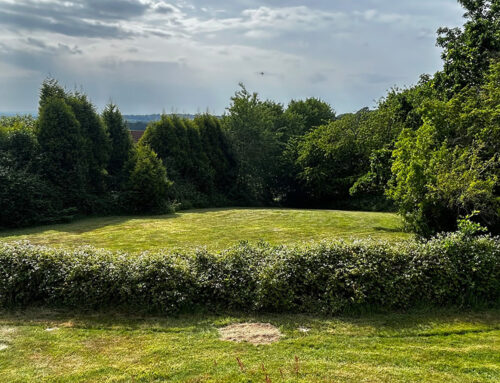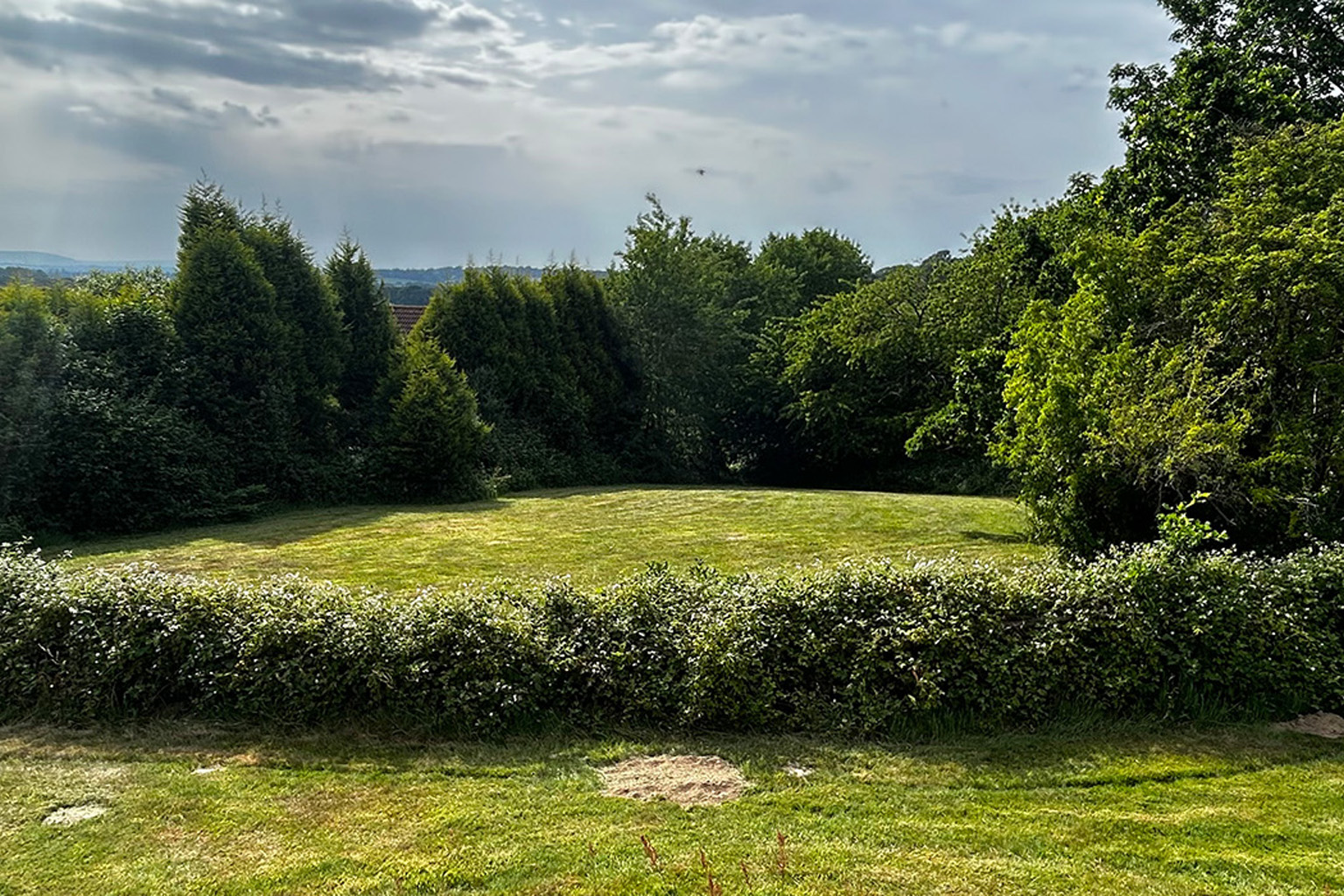
A large garden can look like an obvious development opportunity. There may be room for a new home, demand for housing nearby, and a clear route from the road to the rear of the plot. Yet the question, can garden land be developed, is rarely answered by size alone. The real test is whether a proposal can secure planning consent and be built, sold, or retained at a sensible commercial return.
For landowners in London and the South East, garden development can create substantial value. It can also consume time and money if the site has weak access, harmful overlooking, restrictive planning policy, or construction costs that overwhelm the eventual sale value. A realistic assessment at the outset is the best way to separate genuine potential from an expensive assumption.
Can Garden Land Be Developed Under Planning Rules?
Yes, garden land can be developed, but it does not benefit from an automatic right to build. In England, residential gardens are generally treated as previously developed land, but that description does not guarantee permission. Local planning authorities assess each proposal against their development plan, design policies, housing policies, and the effect on the surrounding area.
A council will usually consider whether the new home looks and functions as though it belongs in its setting. A well-designed single dwelling on a wide plot in an established urban street may be acceptable. A cramped house behind another property, with poor daylight and inadequate parking, may not be.
The distinction matters because a site can be physically capable of holding a building while still being unsuitable for planning purposes. Planning is concerned with the quality and consequences of development, not simply whether a footprint can be drawn on a plan.
The Factors That Decide Whether Garden Land Is Buildable
Every site needs its own appraisal, but the same issues appear repeatedly in garden land proposals. They should be considered together, not in isolation.
Access is often the first hurdle
A new dwelling needs safe, legal, and practical access. That may mean a separate driveway, a shared drive, or access from a side road. The route must be wide enough for vehicles, waste collection arrangements, emergency access where required, and everyday use without creating unsafe conditions.
Landowners sometimes assume an existing side passage solves the issue. It may not. A narrow passage can be unsuitable for cars, while a drive crossing another owner’s land may depend on rights that do not permit residential development. Title review is therefore as relevant as the physical layout.
Space, layout, and privacy matter
Local policies usually set expectations for garden size, separation distances, outlook, daylight, and the relationship between homes. There is no universal minimum plot size that guarantees consent. What matters is the standard of accommodation proposed and the impact on neighbors.
Rear garden schemes are especially sensitive to overlooking and loss of privacy. Upper-floor windows, terraces, access roads, and parking areas can all affect nearby occupiers. A design that reduces these impacts may improve the planning position, but design cannot always overcome a fundamentally tight site.
Character of the area carries weight
Councils often resist backland development where it would disrupt the established pattern of the neighborhood. If homes in the area front onto public streets with long private gardens behind them, a new house in the rear may be seen as out of character. In other locations, backland homes are already common and provide a useful precedent.
Precedent helps, but it must be read carefully. A permission granted several years ago may have been approved under different policy, on a larger plot, or with a separate access point. The useful question is not whether something nearby was built, but whether the circumstances are genuinely comparable.
Trees, drainage, and ground conditions can change the numbers
Mature trees may be protected by a Tree Preservation Order or covered by conservation area controls. Their root protection areas can significantly reduce the usable building footprint. Flood risk, surface-water drainage, contaminated ground, sloping land, and difficult foundations can have the same effect.
These are not always reasons to abandon a site. They are reasons to investigate early. A drainage solution or specialist foundation design may be possible, but the cost needs to be included before anyone attaches a development value to the land.
Heritage and local designations require greater care
Conservation areas, listed buildings, protected views, Green Belt land, and other planning designations can raise the bar considerably. Garden development within a conservation area is not necessarily prohibited, but the design, materials, scale, and impact on local character will receive closer scrutiny.
This is where an early planning review can save months of false starts. A straightforward infill opportunity outside a designation may require a much more considered strategy when heritage constraints apply.
Development Potential Is Not the Same as Development Value
A common mistake is to value garden land by multiplying the expected sale price of a new home. That ignores the costs, risks, and time required to turn a plot into a completed development.
A developer or informed buyer will work backward from the likely value of the finished property. They will allow for demolition, planning and professional fees, construction, financing, utilities, site access, contingencies, marketing, taxes, and an appropriate profit margin. If planning consent is not yet in place, they will also discount for the risk that it may never be obtained.
This is why two similar-looking gardens can attract very different offers. One may have an established access route, supportive local policy, and enough room for a marketable house. The other may need a costly new drive, extensive tree works, and a planning argument with no certain outcome.
For many owners, the best result is not always to obtain planning permission personally. The right route depends on the site, the owner’s appetite for risk, and how much time and capital they are prepared to commit.
Three Practical Routes for a Garden Landowner
You generally have three options. You can sell the land with no planning permission, seek planning permission before selling, or enter an agreement with a developer who funds and manages the planning process.
Selling without consent is quicker and avoids upfront planning costs, but buyers will price in uncertainty. Securing a consent can increase value and attract a broader range of purchasers, although it requires investment and carries the risk of refusal or delay.
A promotion or conditional agreement can suit owners who want to pursue value but do not want to manage a planning application and sale themselves. The terms deserve close scrutiny. The length of the agreement, control over planning strategy, sale process, cost deductions, and minimum price provisions all affect the eventual outcome.
There is no universally best route. A modest but clean cash sale may be preferable to a lengthy planning campaign where the uplift is uncertain. Conversely, a well-located, policy-compliant plot may justify a more strategic approach.
A Sensible First Appraisal Before You Spend Money
Before commissioning detailed architectural drawings, gather the basic information that will shape the decision. This includes title documents, boundary details, rights of way, any covenants, recent planning history, local policy designations, and a clear understanding of access.
Then assess the likely form of development rather than starting with the highest possible number of units. A single well-designed house may be more deliverable, more valuable, and less contentious than an overambitious scheme for two or three units.
At Acresfield Land Agents, the starting point is commercial reality as well as planning potential. That means considering what can plausibly be approved, what it will cost to deliver, and what the market is likely to pay when the project is complete. Those questions should be answered before a landowner commits to a planning route or enters negotiations with a buyer.
When a Garden Plot May Not Be Worth Developing
Some sites are simply better left as gardens. This can be the case where access requires the loss of most of the existing home’s parking or amenity space, where a new house would be heavily overlooked, or where construction would be unusually difficult. It may also apply where dividing the plot reduces the value of the existing house by more than the new plot adds.
That final point is frequently overlooked. The original home and the proposed plot should be valued as a package and separately. A development can be technically possible yet produce little meaningful gain after the impact on the retained property, costs, and risk are properly allowed for.
The strongest garden land opportunities are rarely the ones with the largest headline numbers. They are the sites with a credible planning case, workable access, controlled technical risk, and a clear end market. Start by testing those fundamentals honestly, and the right next step usually becomes much clearer.