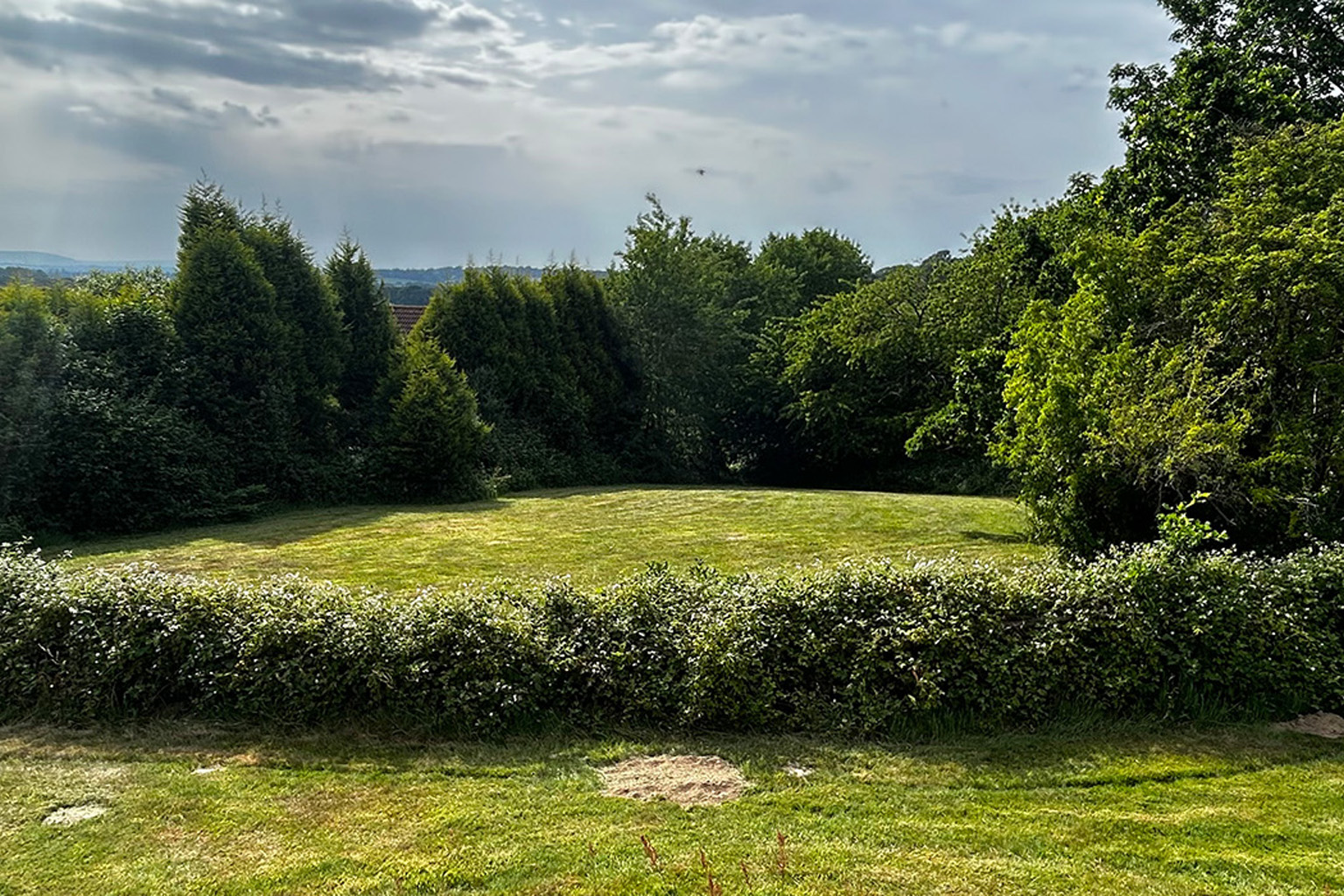
A garden plot that appears large enough for a house, a former commercial yard, or an underused corner of a larger holding can all have development potential. But potential is not the same as value. A proper development land appraisal guide starts by asking a harder question: what can realistically be delivered on this site, at what cost, and with what level of planning and market risk?
That distinction matters because an attractive headline valuation can quickly unravel once access, design, utilities, affordable housing requirements, abnormal costs, or a weak resale market are taken into account. Landowners and developers make better decisions when the appraisal is grounded in evidence rather than optimism.
What a Development Land Appraisal Should Answer
A development appraisal is a commercial test of a proposed scheme. It brings together the likely development value, the full cost of creating that value, and an appropriate allowance for risk and profit. The result helps establish what a developer can sensibly pay for land, or whether it is better to seek planning consent, sell, retain the property, or consider a partnership structure.
It should not be treated as a single fixed number. Early appraisals are based on assumptions, and assumptions change as surveys, planning feedback, and design work progress. The purpose is to make those assumptions visible and test their effect before money is committed.
For a landowner, the central question is often whether the site has enough upside to justify the time and expense of pursuing planning. For a developer or investor, the question is whether the land price leaves sufficient margin after every foreseeable cost has been allowed for. The same appraisal supports both conversations, but each party will look at the findings differently.
Start With the Site, Not the Sales Price
It is tempting to begin with the projected sale value of new homes. That is usually where inflated land expectations begin. The more reliable starting point is the physical and legal reality of the site.
Consider the site boundaries, ownership position, access, neighboring uses, topography, trees, drainage, and existing buildings. A narrow access point may limit the number of homes that can be delivered. A steep site can increase retaining and foundation costs. An easement, ransom strip, or unclear title can affect whether development is possible at all.
Utilities deserve early attention. Power upgrades, drainage connections, water capacity, and diversion of existing services can be material costs, especially on small sites where there is little room in the budget for surprises. Demolition, contamination, flood mitigation, ecological requirements, and off-site highway works can have the same effect.
A site does not need to be problem-free to be developable. It does need a credible route through its constraints. Good appraisal work identifies where further investigation is needed and allows a sensible contingency rather than assuming every issue will be inexpensive to solve.
Planning Capacity Is Not Just a Unit Count
The number of units a site might accommodate is a useful early indicator, but it is not a valuation. A scheme of six houses may look better than four on a sketch plan, yet it may be less likely to secure consent, require costly highway changes, or produce cramped homes that sell more slowly.
Planning policy, local character, daylight and privacy, parking, access, heritage considerations, and amenity space all shape what is likely to be acceptable. The best scheme is not always the largest. It is the one that has a reasonable prospect of approval and can be built and sold at a profit.
This is particularly relevant for infill and garden sites. These plots can be valuable, but they are often sensitive. A modest, well-considered proposal may produce a stronger land outcome than an ambitious scheme that attracts objections, delays, and repeated redesign.
Establish a Realistic Gross Development Value
Gross development value, often shortened to GDV, is the projected market value of the completed scheme. For residential development, it is generally based on the anticipated selling prices of the finished homes. It should reflect comparable evidence, local demand, unit size, specification, tenure, and likely sales timing.
Comparable sales need to be genuinely comparable. A premium new-build apartment in a town center is not reliable evidence for a small house on a constrained edge-of-town site. Nor should an appraisal assume peak pricing simply because a nearby development achieved it several years ago.
Market conditions can change between land acquisition and completion. An appraisal should therefore consider more than one sales scenario. A base case might reflect current evidence, while a downside case tests lower values or slower sales. If the deal only works under the most optimistic scenario, it is not yet a secure deal.
For mixed-use or commercial schemes, the same principle applies. Rental assumptions, yields, vacancy periods, incentives, and tenant demand must be realistic. A high end value is of limited use if the assumed occupier cannot be found.
Account for the Full Cost of Delivery
Build cost is only one part of the equation. A useful appraisal captures the wider cost of delivering a completed, saleable scheme. This commonly includes professional fees, planning and technical reports, surveys, finance costs, sales and marketing, legal costs, warranties, insurance, site security, and contingency.
Construction costs must match the proposed design and the site conditions. A simple build on a clear, level site is different from a basement scheme, a conversion, or homes requiring extensive retaining structures. Early cost plans are necessarily broad, but they should be informed by the type of construction proposed rather than a generic rate applied without adjustment.
Developer contributions and infrastructure obligations can also be significant. Their form varies by location and proposal, but they should be considered early. Leaving them out may create an appraisal that looks profitable on paper but cannot support the land price once the real obligations are known.
Finance is another area where assumptions need care. Interest, arrangement fees, and the timing of drawdowns are affected by the construction program and sales rate. Longer planning or construction periods increase exposure. A scheme with a healthy-looking margin can become uncomfortable if completion slips and finance costs continue to accrue.
Residual Land Value: Useful, but Not a Promise
Once GDV and all development costs have been assessed, the developer’s required profit is deducted. What remains is known as the residual land value. In simple terms, it is the amount available for the land after the development has paid for itself and delivered a return that reflects the risk involved.
The calculation is straightforward in principle:
GDV – development costs – finance – profit = residual land value
In practice, every part of that equation needs judgment. A developer’s required profit is not merely a preference. It compensates for planning uncertainty, construction risk, market movements, and the capital tied up in the project. Reducing the profit allowance to force a higher land value may make a spreadsheet look attractive, but it does not make the scheme more viable.
Residual value should also be checked against market evidence for comparable land transactions where available. A result that is far above established land values may point to overly generous sales assumptions or missing costs. A result below existing-use value may mean the proposed development is not yet viable, unless a different scheme or planning route can improve the outcome.
Test the Assumptions Before Agreeing a Price
A credible appraisal does not rely on one set of figures. Sensitivity testing shows what happens if values fall, costs rise, planning obligations increase, or the project takes longer than expected.
For example, a modest reduction in GDV can have a disproportionate effect on residual land value because most costs are fixed or difficult to reduce. The same is true of abnormal groundworks or a delayed planning decision. This is why a land deal should retain a margin for uncertainty rather than being priced to the absolute limit.
Landowners should be cautious of valuations that do not explain the assumptions behind them. Ask what unit values have been used, what planning position is assumed, whether contingencies are included, and how the developer’s profit has been calculated. Clarity is more valuable than a large unsupported figure.
Developers should take equal care when competing for sites. Paying too much for land is difficult to correct later. A disciplined appraisal may mean walking away from a transaction, but that is often preferable to acquiring a site that only works if everything goes right.
Choose the Right Route for the Land
The appraisal should lead to a practical strategy. If planning prospects are strong and the increase in value is meaningful, securing consent before sale may be worthwhile. If the site carries significant uncertainty, an option or conditional contract can allow a developer to pursue planning while reducing the landowner’s upfront risk.
A promotion agreement may suit larger or more complex sites where a specialist promoter funds the planning process and sells the land after consent. In other cases, an immediate sale is the sensible choice, particularly where the owner values certainty, speed, or confidentiality over pursuing the full planning uplift.
There is no universal best route. The right decision depends on the owner’s appetite for risk, funding position, timescale, tax advice, and confidence in the planning outcome. Acresfield Land Agents approaches this stage as a commercial decision, not simply a route to the highest quoted number.
A sound appraisal gives you a basis for acting with confidence. It identifies what the land may achieve, what could prevent it, and what needs to be resolved next. That is the point at which a site moves from an interesting opportunity to a decision that can be made sensibly.