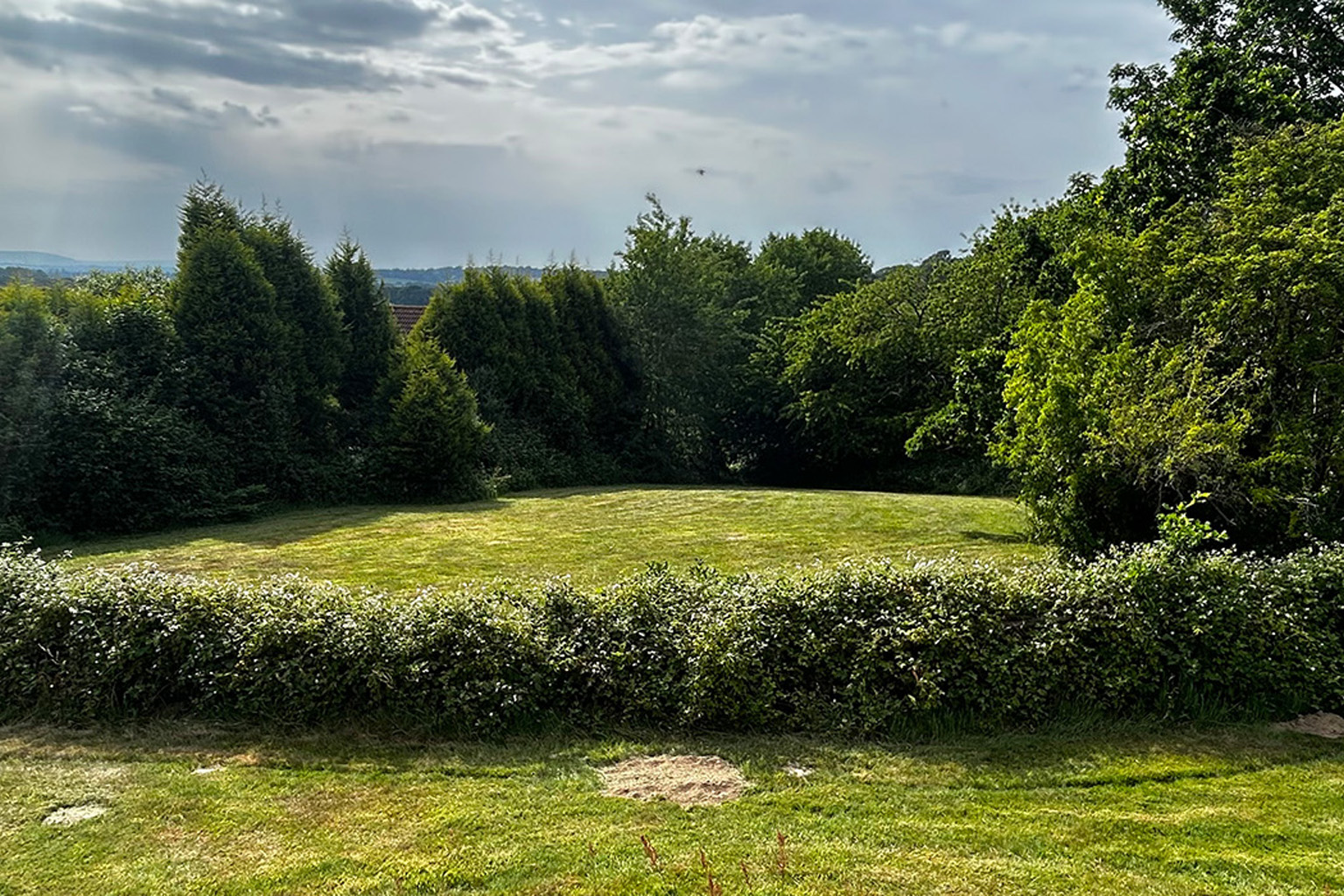
A site can look straightforward from the road and still carry constraints that change its value completely. A rear garden may have access but no practical drainage route. A former commercial yard may sit in a strong residential location but require costly contamination work. A paddock on the edge of a settlement may appear ideal for housing yet fall outside the development boundary.
Knowing how to assess planning constraints early is therefore not an administrative exercise. It is the point at which a promising idea becomes a realistic development strategy, a lower-value sale, or a site that should be left alone. The objective is not to find a site with no issues. Almost every development site has them. The objective is to understand which constraints can be managed, what they will cost, how long they may take, and whether the scheme still works once those factors are allowed for.
Start with the planning position, not the site sketch
Many landowners begin with a layout showing how many homes might fit on a parcel. That can be useful, but it is not a planning assessment. Before considering unit numbers, establish how the local planning authority is likely to view development in principle.
Check the adopted local plan, settlement boundary, site allocations, designations, and relevant neighborhood planning policies. A site within an established settlement may be supported in principle, while land immediately beyond the boundary could face a much higher policy hurdle. This does not automatically make edge-of-settlement land worthless, but it changes the route, timing, and risk profile.
Planning history also matters. Previous refusals, withdrawn applications, appeals, and pre-application advice can reveal objections that are likely to return. Equally, a neighboring approval may offer useful evidence, although it should never be treated as a guarantee. Small differences in access, overlooking, flood risk, or local policy can lead to a different outcome.
The key question is simple: is development acceptable here in principle, or must the case for development be argued from the ground up? The answer affects everything that follows, including land value and the appropriate buyer.
How to assess planning constraints in layers
A useful appraisal works through constraints in layers rather than relying on one headline issue. Some matters are clear from public records; others need an initial site visit, surveys, or specialist input. The most commercially useful assessment separates fatal constraints from manageable ones.
Physical and access constraints
Start with the basic practicalities. Can vehicles enter the site safely? Is there enough width for an access road, visibility splays, refuse collection, emergency access, and construction traffic? A narrow driveway can sometimes serve a modest scheme, but it may not support the number or type of homes originally assumed.
Topography can have a similar effect. Sloping land may require retaining structures, stepped foundations, drainage solutions, and more complicated construction methods. Those costs are not always visible in an early valuation, but they can materially reduce the amount a developer can pay for the land.
Also consider site shape, levels relative to neighboring properties, existing trees, rights of way, overhead lines, easements, and ownership boundaries. An irregular plot may still be developable, but an efficient building footprint is often worth more than a larger area with awkward geometry.
Flooding, drainage, and ground conditions
Flood risk is frequently misunderstood. A flood designation does not necessarily prevent development, but the planning authority will expect a proportionate risk assessment and a credible drainage strategy. In some locations, the issue is not river flooding but surface water, sewer capacity, or the inability to discharge water from the site without affecting neighbors.
Sustainable drainage can take up meaningful land area. Basins, attenuation tanks, swales, and maintenance access may reduce the number of units that can be delivered. On a tight infill site, that reduction can be commercially significant.
Ground conditions require the same level of realism. Former industrial uses, filled ground, fuel storage, and nearby historic uses can indicate contamination risk. A preliminary desk study may be enough to identify whether further investigation is needed. If remediation, piling, or ground improvement is likely, allow for it early rather than assuming it can be absorbed later.
Ecology, trees, and heritage
Mature trees can add value to a setting, but they also create root protection areas that restrict where buildings, roads, and drainage can go. A tree survey will often clarify whether a tree can be retained, whether it is protected, and what layout flexibility remains. Removing a tree may be possible, but replacement planting and local objections can affect the planning balance.
Ecology constraints vary by site and season. Protected species, nesting birds, bat roosts, habitats, and nearby designated areas may require surveys and mitigation. The timing of those surveys matters. Missing a seasonal survey window can delay an application by months, even where the eventual solution is straightforward.
Listed buildings, conservation areas, locally listed assets, and archaeology need careful consideration too. These constraints do not always rule out development. They do, however, place greater weight on design, materials, scale, views, and the quality of the supporting justification. A scheme that may be acceptable elsewhere can be unsuitable in a sensitive heritage setting.
Test the scheme against its neighbors
Planning decisions are made in a local context. A proposal must respond to neighboring homes, streets, open space, and the character of the area. This is where overly optimistic site layouts often begin to unravel.
Assess overlooking, privacy, daylight, sunlight, outlook, noise, parking, and the relationship between new buildings and existing boundaries. A notional plan can show four homes, for example, but proper separation distances, usable gardens, bin storage, parking, and turning space may reduce that to two or three. Fewer units do not necessarily make a site unviable, but the land price and development strategy must be adjusted accordingly.
Local design guidance should be reviewed alongside national policy. Some authorities favor lower-density family housing in suburban locations; others support apartments near transport centers. The right approach depends on the location, market demand, and the ability to create a scheme that looks deliberate rather than squeezed in.
Do not ignore infrastructure and planning obligations
A site may achieve planning permission and still underperform financially if infrastructure costs are underestimated. Utilities are a common example. New electricity capacity, water upgrades, sewer connections, telecoms, and diversions can be expensive and slow, particularly where the site sits behind existing properties or has no direct highway frontage.
Planning obligations can also affect viability. Depending on the scale and location of the scheme, these may include affordable housing contributions, community infrastructure payments, highway works, open-space provision, or education contributions. The precise position will depend on local policy and the nature of the proposal, but they should be considered before agreeing a land price.
For small sites, the commercial challenge is often that fixed costs are spread across too few units. Surveys, consultants, access works, utility connections, and planning fees can be manageable on a larger development but disproportionately heavy on a two- or three-home scheme.
Translate constraints into commercial decisions
The most useful planning assessment does not end with a red-amber-green map. It asks what the findings mean for the next decision.
If a site has a clear policy basis, workable access, and no unusual technical barriers, it may be suitable for a planning application before sale or for a carefully managed sale subject to planning. If the risks are identifiable but unresolved, an option or promotion agreement may be more appropriate than an unconditional disposal. Where constraints are substantial, selling to a specialist buyer who understands the risk may be preferable to spending heavily on a speculative application.
This is also where viability needs to be tested honestly. Estimate a realistic sales value for the completed homes, then deduct build costs, professional fees, finance, contingencies, planning obligations, and an appropriate developer return. The residual figure is not a promise of land value. It is a guide to what the project can support after risk is recognized.
A high headline offer that ignores access works, drainage, or planning risk is rarely the best offer. Terms, conditions, timescales, buyer capability, and the likelihood of completion often matter more.
Get the right level of advice at the right time
Not every site needs a full suite of surveys before it is marketed or discussed with a developer. Spending should be proportionate. An early desktop review, policy appraisal, site walkover, and outline viability assessment can usually identify whether a site merits deeper work.
Where the opportunity is credible, targeted input from a planning consultant, architect, transport engineer, drainage specialist, ecologist, or surveyor can remove uncertainty before it becomes expensive. The right sequence depends on the site. A constrained town-center plot may need access and design input first, while a greenfield edge site may require policy, landscape, ecology, and drainage advice earlier.
At Acresfield Land Agents, the focus is on turning those findings into a practical route forward, not simply producing an optimistic capacity figure. That may mean preparing for planning, approaching selected buyers confidentially, or deciding that the current proposal does not justify further cost.
A good site appraisal should leave you with a clearer decision, not a thicker folder. If the planning constraints are understood before expectations and price are set, you can protect time, control avoidable costs, and negotiate from a more credible position.