A site can look like an obvious development opportunity from the road and still be unbuildable, unprofitable, or tied up in years of planning work. Knowing how to assess development land means looking beyond acreage, asking price, and an agent’s headline capacity. The question is not simply what could be built. It is what can realistically be permitted, funded, built, and sold at a margin that justifies the risk.
For landowners, this assessment informs whether to sell now, pursue planning consent, or consider a partnership. For developers and investors, it should happen before an offer becomes unconditional. Good land appraisal is not about finding a perfect site. It is about identifying the risks early, pricing them sensibly, and deciding whether the opportunity remains worthwhile.
Start with the planning position
Planning is usually the first value driver, but it should not be treated as a simple yes-or-no question. Land without permission may still have strong potential, while land with consent may carry conditions, design requirements, or infrastructure obligations that materially reduce its value.
Begin by establishing the site’s planning history. Previous applications, refusals, appeals, pre-application discussions, and enforcement matters all provide useful evidence. A past refusal does not automatically end the opportunity, but the reasons for refusal matter. Was the principle of development unacceptable, or was the scheme too large, poorly designed, or affected by a technical issue that can be addressed?
Review the local plan, site allocations, settlement boundaries, housing policies, and any relevant neighborhood plan. A site inside an established urban area with a policy basis for housing is generally a different proposition from open land outside a settlement boundary. That said, policy support is not a guarantee. Design, highways, ecology, drainage, heritage, and local political considerations can still determine the outcome.
If the site has existing consent, read the decision notice and approved plans rather than relying on a sales brochure. Check the expiration date, pre-commencement conditions, affordable housing requirements, Community Infrastructure Levy exposure where applicable, and any obligation to provide highways works or public open space. Consent has value only if it can be implemented on commercially sensible terms.
Assess development land from the ground up
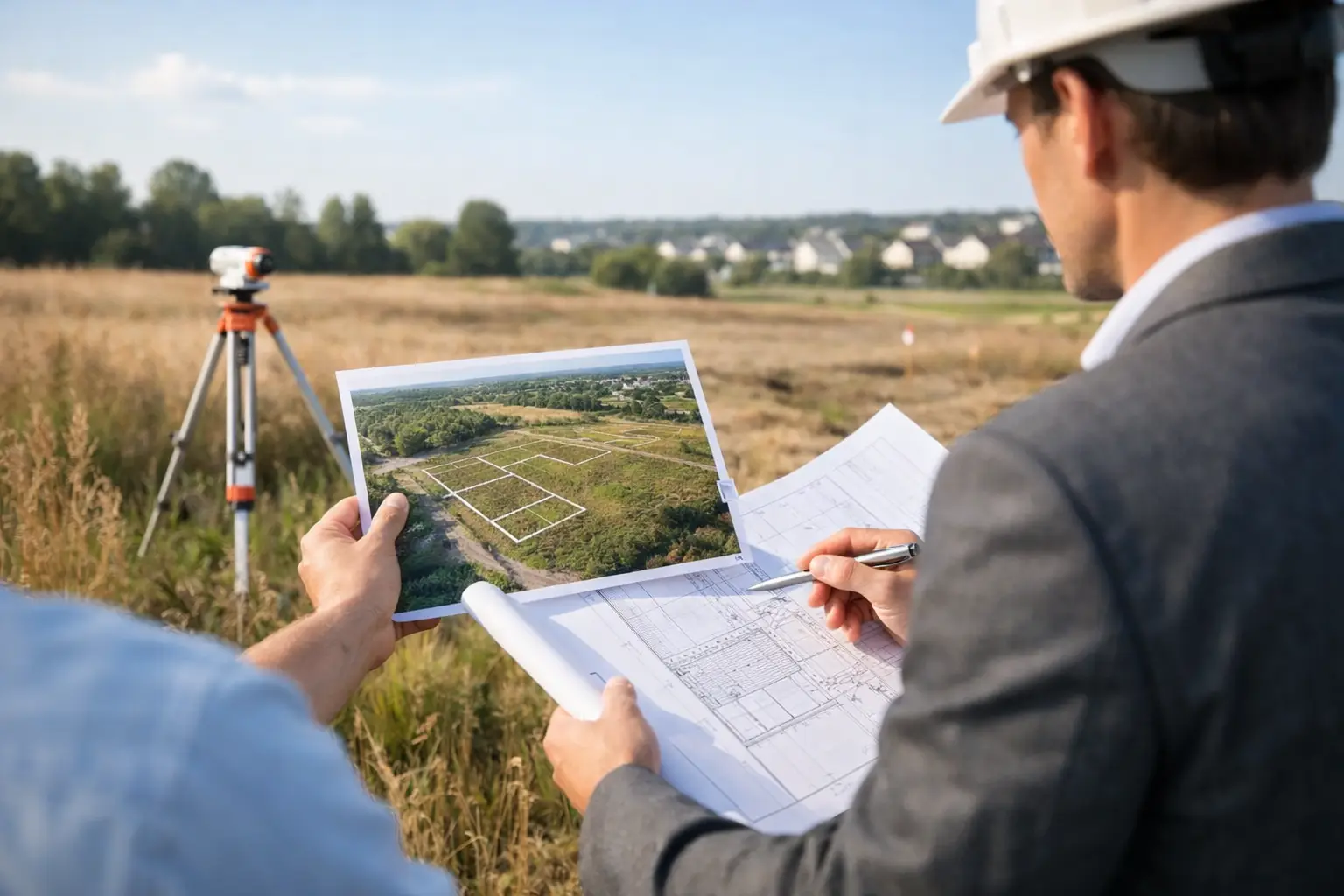
A desktop review is an efficient starting point, but land must be inspected. The physical character of a site often reveals constraints that a boundary plan does not show.
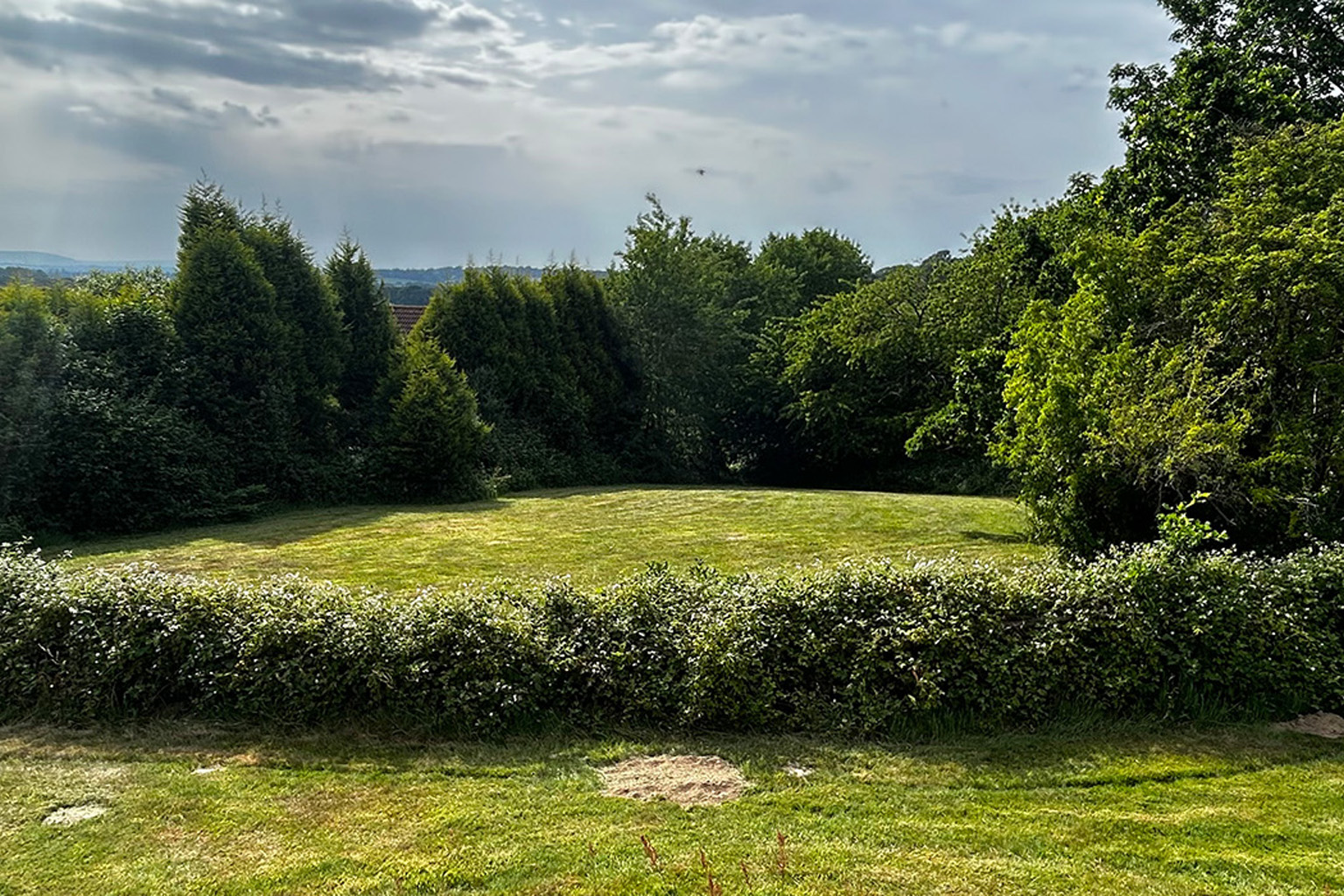
Topography matters because steep slopes can add retaining walls, complicated foundations, drainage challenges, and reduced usable area. Mature trees may be attractive but can restrict building footprints and trigger costly protection measures. Watercourses, ponds, signs of flooding, overhead lines, easements, neighboring windows, and awkward changes in ground level should all be considered before assumptions become fixed.
Ground conditions deserve particular care. Historic uses such as garages, industrial yards, filling stations, or made ground can create contamination and remediation costs. Clay soils, unstable ground, mine workings, and high water tables can affect foundation design and drainage. Early reports may not answer every question, but they can indicate whether specialist investigations are needed before exchange.
The gross site area is rarely the area available for homes or commercial space. Setbacks, visibility splays, access roads, landscaping, drainage features, tree root protection areas, and ecological buffers can all reduce the net developable area. A site that appears large enough for eight homes may only accommodate five once these requirements are properly allowed for.
Access is not a minor detail
Legal and practical access must work together. A narrow lane, shared driveway, or apparent entrance across third-party land can be a serious obstacle, even where the site itself is well located. Establish who owns the access, what rights exist, whether they allow construction traffic and future occupiers, and whether any ransom strip could prevent development.
Highway safety is equally important. The local highway authority may require adequate visibility, turning space, pedestrian provision, or works to the public highway. These measures can be manageable, but they can also remove land, increase costs, or make the intended number of units unachievable.
Test utilities, drainage, and technical constraints early
A development site needs more than a good address and an acceptable planning argument. It needs power, water, foul drainage, surface-water drainage, and telecommunications that can be delivered without eroding the project’s profit.
Do not assume that nearby homes mean services are readily available or have enough capacity. A power upgrade, new substation, pumped sewer connection, or long off-site water main can change the appraisal quickly. Initial utility searches and budget estimates are worthwhile where the scheme depends on significant connections.
Drainage is often underestimated. Where a public sewer connection is limited or unavailable, an on-site drainage strategy may be required. Sustainable drainage systems need land, suitable ground conditions, and long-term maintenance arrangements. Flood risk also needs to be assessed in context. A site outside a mapped flood zone can still face surface-water flooding or drainage constraints that affect layout and insurance.
Other technical matters may include protected species, tree preservation orders, conservation areas, listed buildings, archaeology, noise, air quality, contamination, and rights of light in denser locations. Not every issue is fatal. The commercial question is whether it can be resolved within an acceptable timeframe and budget.
Build a realistic viability appraisal
A land valuation should follow viability, not lead it. Too many opportunities are assessed by multiplying the proposed number of units by an optimistic sales value and subtracting a broad construction estimate. That approach ignores the costs and contingencies that determine whether a project is truly deliverable.
Start with a cautious view of gross development value. Use evidence from comparable new-build sales or rents, adjusted for location, specification, unit size, parking, and buyer demand. Do not value every proposed unit at the best price achieved by a landmark scheme nearby. Markets differ street by street, and smaller developments may not command the same premium.
Then allow for the full development cost. This includes construction, demolition, site preparation, professional fees, surveys, planning costs, finance, marketing, sales costs, warranties, insurance, taxes, and contingency. Add infrastructure and abnormal costs separately where possible rather than burying them in a general build-rate assumption.
Developer profit is not a surplus that can be removed to make the land price work. It is the return required for taking planning, construction, funding, and market risk. The appropriate margin depends on the nature of the site, the stage of planning, and the level of uncertainty. A straightforward consented infill plot can support a different land price from a speculative site requiring policy change, technical mitigation, and a long planning process.
Use sensitivity testing. Ask what happens if sales values fall by 5%, build costs rise by 10%, the unit count drops, or the planning timeline extends by a year. If the scheme only works under the most favorable assumptions, it is not a strong acquisition. It may still be worth pursuing, but the offer and deal structure should reflect that risk.
Consider the best route to value
The right outcome is not always to secure full planning permission and sell. For some landowners, a sale with an option or promotion agreement may provide a sensible balance between upside and risk. For a developer, an acquisition conditional on planning may protect capital while allowing time to investigate the site properly.
An unconditional purchase can be appropriate where planning risk is limited and the price reflects the remaining work. It is less suitable where access, utilities, title matters, or policy support have not been tested. Deal structure is part of land assessment because it decides who carries the cost and risk if the original assumptions prove wrong.
Timing also matters. A site with strong long-term potential may not suit an investor seeking a quick exit, while a patient landowner may prefer to wait for a better planning position. Clear objectives prevent a technically attractive site from becoming the wrong commercial decision.
Complete legal and market due diligence
Before committing, review title documents, restrictive covenants, easements, overage provisions, tenancies, ransom strips, and third-party rights. Legal issues are often solvable, but they should be known before price and terms are agreed. A covenant preventing additional dwellings or a right of way crossing the only viable access route can materially alter the strategy.
Finally, assess the local market honestly. Who will buy or occupy the completed development? What competing schemes are coming forward? Are the proposed homes the right size and price point for the area? Strong planning potential does not compensate for weak end demand.
The best development land decisions are usually made before a site is bought or marketed, when there is still time to challenge assumptions. A careful appraisal may reduce an initial valuation, but it can also reveal a clearer route to permission, a better deal structure, or a site whose value is genuinely worth pursuing.